
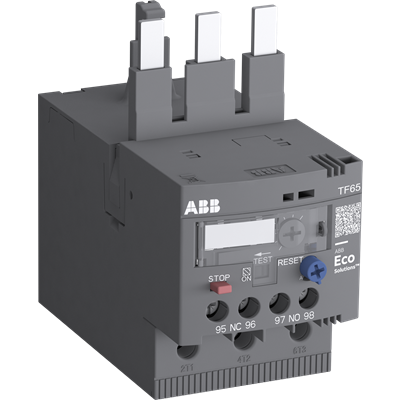
ABB TF65-40 – Electronic Overload Relay, 25-40A Setting Range
€0.00 ex VAT
Description
The ABB TF65-40 is an electronic overload relay from ABB’s TF65 series, providing precise and reliable motor overload protection with a current setting range of 25–40 A. Designed for direct mounting onto compatible ABB AF65 contactors, this electronic relay uses a microprocessor-based thermal model to monitor motor current and calculate the thermal state of the motor windings with greater accuracy than conventional bimetallic thermal relays. This enables more precise protection thresholds, faster response to overload conditions, and the ability to provide consistent protection performance independent of ambient temperature variations.
The TF65-40 complies with IEC 60947-4-1 and provides Class 10 tripping characteristics. The adjustable current setting dial enables precise calibration to the motor’s rated full-load current within the 25–40 A range, and built-in phase failure sensitivity ensures the relay responds correctly to single-phasing conditions. The electronic overload relay design provides more stable and repeatable tripping characteristics compared to bimetal relays, which can drift with temperature and may be affected by heating within a crowded panel enclosure. A trip indicator and manual reset function are incorporated as standard.
The TF65-40 mounts directly onto compatible ABB AF65 contactors via a direct-fit adapter, creating a compact and co-ordinated motor starter assembly within the control panel. Auxiliary contact outputs provide trip feedback for integration with PLC systems, SCADA monitoring, and remote alarm circuits. This relay is used in motor control panels across industrial, building services, water treatment, and process applications throughout Ireland and Europe, providing dependable electronic overload protection for three-phase induction motors in the 25–40 A range where the enhanced accuracy and stability of electronic protection is required or preferred over thermal relay alternatives.
Related products
-

RJ45 OUTLET SATIN CHROME
€5.84 ex VAT Read more -
LTE700 WFAV 225 Masthead Amp & PSU Kit
€20.90 ex VAT Read more -
KNIPEX 1000V 200MM Diagonal Cutters
€0.00 ex VAT Read more -
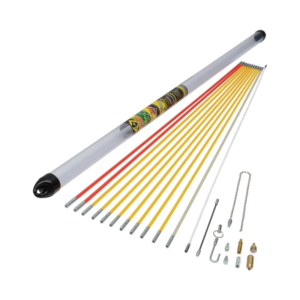
MightyRods PRO 12m Super Set
€141.41 ex VAT Read more