
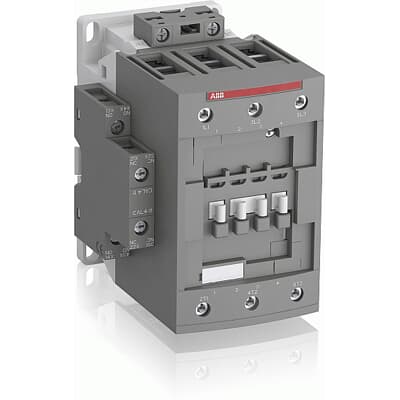
ABB AF96-30-11 – 3-Pole Contactor, 45kW/400V, 200A, 2 Aux Contacts
€0.00 ex VAT
Description
The ABB AF96-30-11 is a heavy-duty 3-pole AF-Line contactor designed for industrial motor control applications requiring switching of loads up to 45 kW at 400 V AC (AC-3) or 60 hp at 480 V UL, with an AC-1 general-purpose switching capability of 200 A at IEC ratings or 175 A at UL-A600. Supplied with two built-in auxiliary contacts and screw terminals, this contactor provides comprehensive signalling capability for interlock, run indication, and alarm applications within industrial motor control circuits. Its high current rating makes it appropriate for large motors in demanding process plant and industrial applications.
Rated at 1000 V IEC or 600 V UL and compliant with IEC 60947-4-1 and UL 508, the AF96-30-11 features ABB’s wide-range coil accepting 100 to 250 V AC at 50/60 Hz or 100 to 250 V DC. This versatility allows the same contactor to be used across different control voltage standards, streamlining procurement and reducing the variety of spares held on site. The contactor’s heavy-duty silver alloy contacts and robust moulded housing are designed to withstand the mechanical and thermal demands of high-cycle industrial motor switching applications.
Compatible with ABB’s TF96 series electronic overload relays, the AF96-30-11 can be assembled into a complete, co-ordinated motor starter for 45 kW motors. Its two built-in auxiliary contacts facilitate interlocking in complex motor control schemes, PLC feedback integration, and remote fault signalling. This contactor is widely applied in large pumping installations, heavy compressor control, industrial process plant, marine and offshore applications, and motor control centres where dependable high-current switching and compliance with international electrical standards are essential requirements.
Related products
-

RJ45 OUTLET SATIN CHROME
€5.84 ex VAT Read more -
KNIPEX 6MM Hex Socket Screwdriver T-Handle
€40.03 ex VAT Read more -
3G 2W 400W DIMMER SATIN CHROME
€56.00 ex VAT Read more -
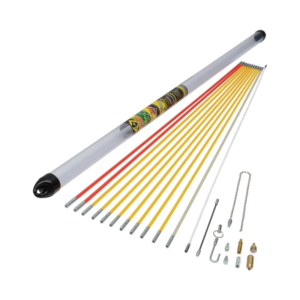
MightyRods PRO 12m Super Set
€141.41 ex VAT Read more